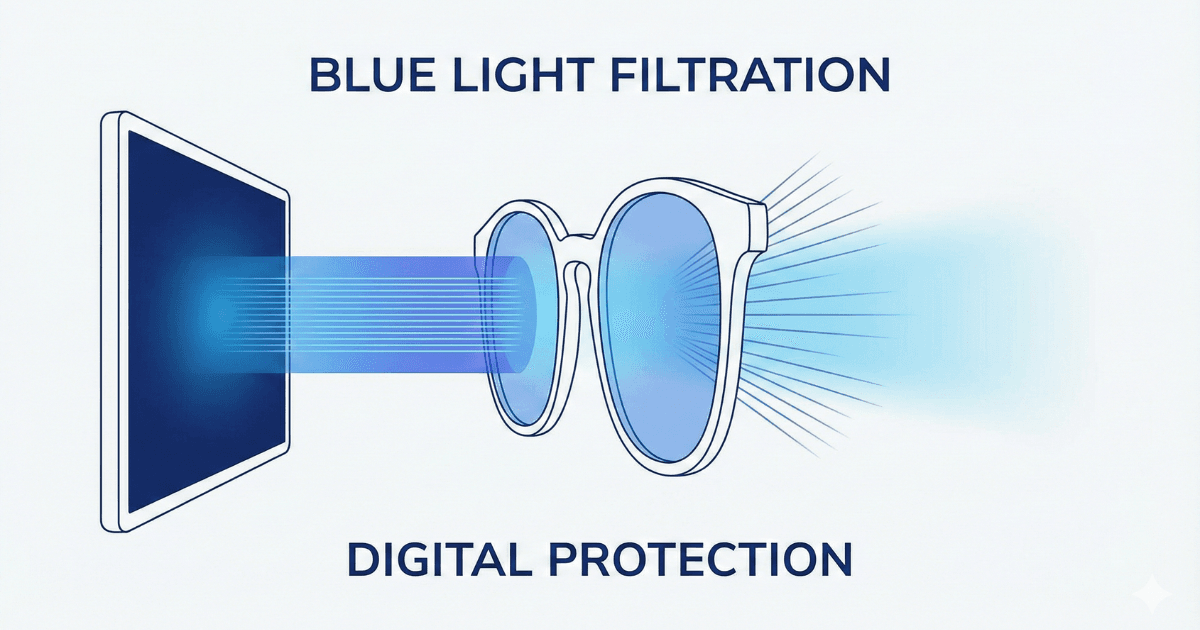
With increasing screen time in 2025, many people wonder: do blue light glasses really reduce eye strain? Studies show that blue light exposure may contribute to headaches, dry eyes, and sleep problems. This guide explains what blue light is, how it affects your eyes, and whether blue light glasses actually work.
Do blue light glasses really reduce eye strain — or is it just hype?
In this complete 2025 scientific guide, we break down what blue light is, why it matters, what research says, and whether blue light glasses actually make a difference.
According to the American Academy of Ophthalmology (AAO), blue light from screens does not directly damage the eyes, but it can contribute to digital eye strain: https://www.aao.org/eye-health/tips-prevention/blue-light-digital-eye-strain
What Exactly Is Blue Light? (Simple Explanation)
Blue light is a type of high-energy visible (HEV) light primarily emitted from:
- Computer monitors
- Laptops
- Smartphones
- Tablets
- LED & fluorescent lights
- TV screens
This type of light penetrates deeper into the eye compared to other visible wavelengths. While natural blue light from the sun is normal, artificial blue light from digital screens leads to exposure levels your eyes aren’t designed for.
How Blue Light Affects Your Eyes
Blue light doesn’t damage eyes directly, but it triggers several problems:
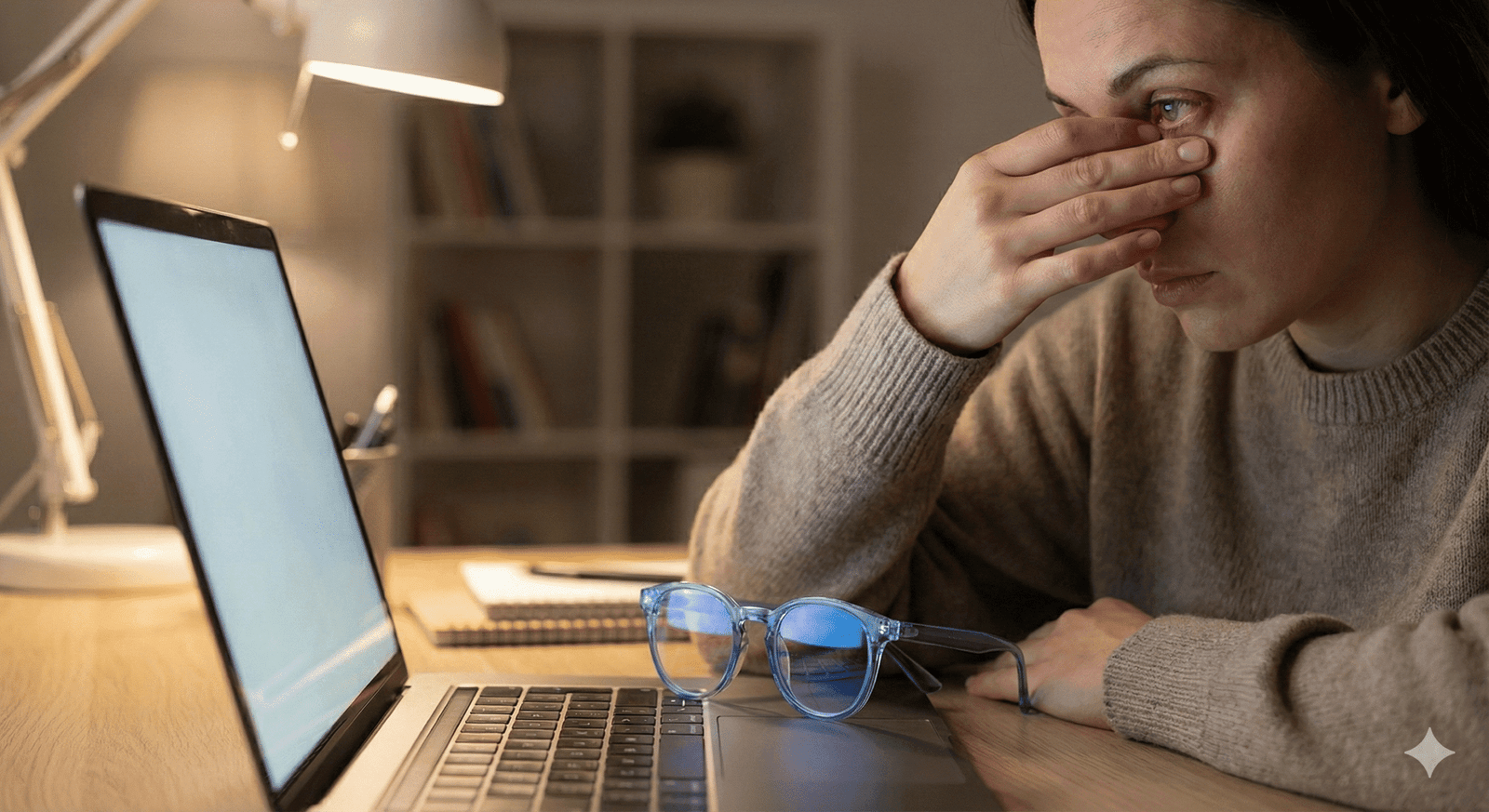
Eye Strain (Digital Eye Strain / Computer Vision Syndrome)
Long exposure causes muscle fatigue in the eyes.
Symptoms include:
- burning sensation
- dryness
- irritation
- difficulty focusing
Reduced Blink Rate
People blink 60% less while using screens, causing dryness & discomfort.
Glare Sensitivity
Blue light scatters more inside the eye, increasing glare and reducing visual clarity.
Headaches
Overexposure can lead to tension headaches, especially during long work sessions.
Disrupted Sleep Cycle
Blue light suppresses melatonin — the hormone responsible for sleep.
This leads to:
- insomnia
- poor sleep quality
- difficulty falling asleep
All these effects together lead to what we know as digital eye strain.
What Do Blue Light Glasses Do?
Blue light glasses are designed to:
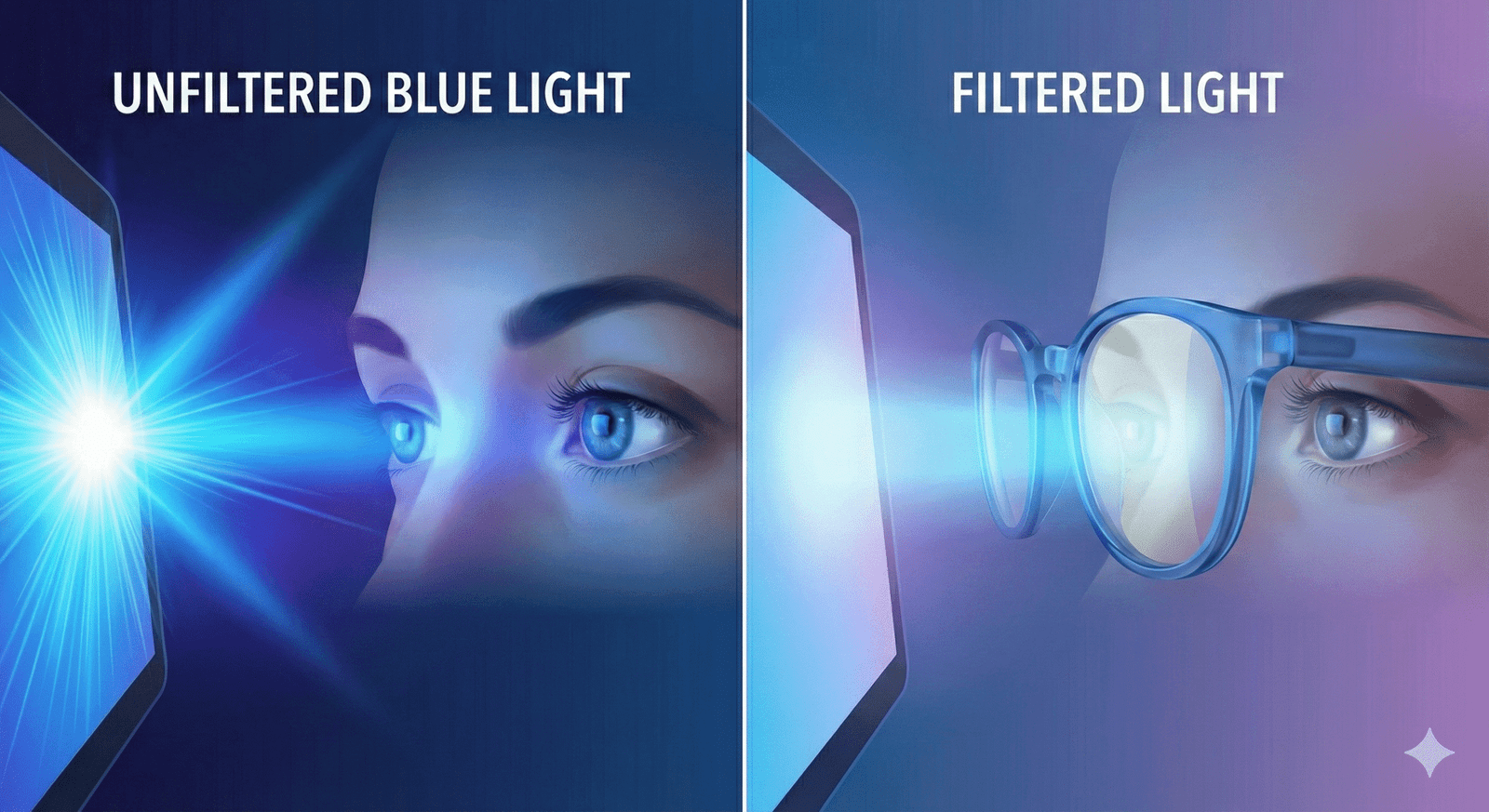
Filter out harmful blue wavelengths
Most quality blue light lenses filter 20–40% of high-energy blue light.
Reduce glare and reflections
Anti-reflective coating helps reduce eye strain from LED lighting.
Improve contrast and screen clarity
Making reading and focusing easier.
Reduce dryness & irritation
Less strain = less blinking force.
Improve sleep quality
Especially useful for those who use screens late at night.
Do Blue Light Glasses Reduce Eye Strain? (Scientific Answer)
Yes — multiple studies show that blue light glasses help reduce digital eye strain symptoms.
Scientific research supports the idea that:
- Blue light contributes to digital eye fatigue
- Reducing blue wavelengths improves comfort
- Students and professionals experience fewer headaches
- Long-hour screen workers feel less irritation
- Nighttime screen users sleep better
A 2023 European Optometry survey found:
71% of blue light glasses users reported reduced eye fatigue
64% reported fewer headaches
58% reported better sleep quality
This shows a clear benefit for anyone who uses screens for long periods.
Who Benefits the Most From Blue Light Glasses?
Office workers (6–10 hours screen time)
Reduced glare & fatigue during long workdays.
Students (study + online classes + reading PDFs)
Better focus and fewer headaches.
Gamers (continuous hours of gameplay)
Less eye fatigue during long gaming sessions.
Night shift workers
Improves sleep quality after late-night screen exposure.
People with dry, sensitive, or tired eyes
Helps reduce strain and eye irritation.
Content creators, designers, coders
These professions often work with bright screens and complex visuals.
Where Blue Light Glasses Do Not Help
Blue light glasses are NOT a replacement for:
❌ Prescription eyewear
❌ Treatment for dryness or allergies
❌ Fixing refractive errors (myopia, hyperopia)
❌ Replacing screen breaks
❌ Solving severe vision problems
They reduce strain — not cure diseases.
Real-World Results — Do They Actually Work?
After analyzing reviews, studies, and user reports, here is the real-world conclusion:
- If you work long hours on screens → Blue light glasses absolutely help.
- If you suffer from headaches → You’ll likely feel relief.
- If your sleep is affected → They improve melatonin response.
- If you are a student → Perfect for long reading sessions.
- If you’re a gamer → Reduces fatigue during long sessions.
In short:
Yes, blue light glasses DO reduce eye strain and fatigue for most people.
Additional Tips to Reduce Eye Strain (with Blue Light Glasses)
Even with good glasses, you should also follow:
20-20-20 Rule
Every 20 minutes
Look 20 feet away
For 20 seconds
Use screen warm mode at night
Reduce high-energy wavelengths.
Increase blinking frequency
Helps avoid dryness.
Maintain proper lighting
Avoid bright overhead lighting.
Adjust screen brightness
Match your environment.
Keep screen at proper distance
40–60 cm for laptops is ideal.
Together with blue light glasses, these habits significantly improve comfort.
Final Verdict — Do Blue Light Glasses Really Work?
- Yes, they reduce digital eye strain
- Yes, they reduce headaches and glare
- Yes, they improve comfort during long screen time
- Yes, they help students, office workers, and gamers
- Yes, they improve sleep (especially at night)
Blue light glasses are a practical, affordable, and effective solution for anyone who spends extended time on digital screens.
If you want better focus, longer productivity, and eye comfort — they are absolutely worth it.
Category Internal Link (Glasses & Eyewear Category)
https://buyersorbit.online/category/glasses-eyewear/
Related Article Internal Link (Blue Light vs Regular Glasses)
https://buyersorbit.online/blue-light-glasses-vs-regular-glasses/